


To optimize your WoW raid composition, aim for a balanced mix of tanks, healers, ranged and melee DPS. Adjust numbers based on encounter mechanics, and identify your team’s strengths – choose tanks able to manage threat, select a diverse range of healing classes for varied cooldowns, and build a versatile DPS lineup. Leverage class synergies and have backup strategies ready for unexpected circumstances. Ensuring clear communication is also essential. Curious to further enhance your strategies? Explore onward.
Key Takeaways
- Aim for a diverse raid composition with 2-3 tanks, 4-5 healers, and 15-20 DPS, maintaining a melee to ranged DPS ratio of 40:60 or 30:70.
- Select tanks and healers based on their unique abilities, focusing on threat management and balanced healing between raid and spot healers.
- Tailor the DPS composition according to fight mechanics, with a focus on mastering DPS rotations and damage profiling for optimal performance.
- Utilize class-specific buffs and debuffs, ensuring synergy among classes and exploit abilities like Bloodlust/Heroism for increased raid efficiency.
- Communication is vital; use voice chat for coordination, conduct pre-raid briefings for strategy execution, and maintain concise and positive communication etiquette.
The Importance of a Balanced Team Composition

Understanding the significance of a balanced team composition can make or break your success in WoW raids. It’s all about team dynamics and role efficiency. You have to balance tanks, healers, and DPS for maximum performance.
Typically, this means aiming for 2-3 tanks, 4-5 healers, and 15-20 DPS in a 25-player raid. But don’t be rigid. Adjust these ratios based on encounter mechanics and raid size. Consider integrating hybrid classes for role flexibility.
Don’t forget to maintain a proper melee to ranged DPS ratio, ideally 40:60 or 30:70. Class synergy is just as vital. Combine classes with complementary buffs and debuffs, ensuring coverage of all major raid buffs.
Mix classes with strong single-target and AoE capabilities. Include classes that bring utility spells to the table. And always remember, a team that adapts together, wins together.
Build a roster with players capable of switching roles and foster a culture of flexibility. Additionally, keep in mind that it’s recommended to limit the number of healers to 8 or 9 for optimal DPS output, a crucial factor for raid success. This is known as healer optimization.
Tank Selection and Effective Strategies
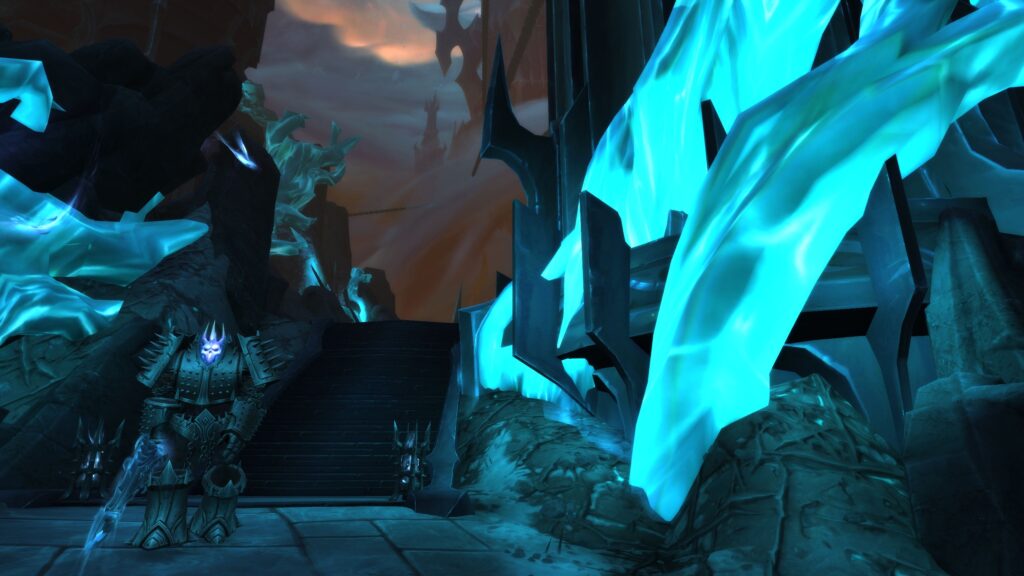
Now, let’s shift your focus to the essential role of tank selection in your raid composition and the strategies you’ll need to master.
Whether you’re favoring the physical damage mitigation of a Warrior or the self-healing capabilities of a Blood Death Knight, your choice can greatly influence the success of your raid. It’s crucial to understand that tank selection can also affect your team’s adaptability, as different classes excel in specific encounters.
But it’s not just about picking the right class, you’ll also need to be adept at threat management, from maintaining high threat on primary targets to effective use of taunts, all while ensuring your survivability. Team adaptability is a central aspect to consider in your raid strategy.
Balancing Tank Roles
While it may seem intimidating at first, making the right choices in tank class selection is a critical aspect of forming a well-rounded raid team in World of Warcraft. Each tank brings unique strengths to the table, from the Blood Death Knight’s self-healing to the Protection Warrior’s consistent damage reduction.
These strengths must be balanced to maximize tank synergy, ensuring that your team can handle whatever the raid throws at you. Cooldown coordination between tanks is also key, allowing for smooth tank swaps and effective management of debuffs.
Remember, proper positioning helps control boss facing and cleaves, while gear optimization and an understanding of boss mechanics can further elevate your performance.
Mastering Threat Management
If you’re hoping to improve your raid success, mastering threat management is a key skill that shouldn’t be overlooked.
Selecting the right tank for the job, whether it’s a Blood Death Knight for self-healing, or a Protection Warrior for physical mitigation, is essential.
Understand the abilities in your tank’s toolkit for effective threat rotation. Use high-damage abilities to establish initial threat, and rotate Area-of-effect (AoE) abilities to maintain it.
Strategically use taunts to regain aggro and manage tank swaps effectively. Coordinate with DPS to guarantee adequate threat buildup before they release their burst phases.
You’ll need to monitor threat meters and communicate with your raid team for successful aggro management.
Optimizing the Healer Lineup
As you strategize your healer lineup for WoW raids, it’s essential to find a balance between raid and spot healers.
You’ll want to coordinate healer cooldowns for maximum efficiency, ensuring that burst and sustained healing abilities are spread evenly across the team.
Also, pay mind to role-specific healer allocation, as diversifying your healing classes can offer varied cooldowns and utility, making your raid group more versatile and adaptable.
Balancing Raid and Spot Healers
Crafting an effective healer lineup for your World of Warcraft raid team involves more than just ensuring you have enough bodies to cover the healing role.
It’s about healer synergy, balancing healing styles, and understanding encounter mechanics.
1. Healer Synergy – Pairing complementary healing styles, like HoT-based with direct healing, can optimize your team.
2. Healing Styles – Distribute healers with different strengths across raid groups.
Balance mana-efficient healers with high-throughput options.
3. Encounter Mechanics – Consider healer mobility and allocate healers in a way that maximizes efficiency for specific mechanics.
4. Managing Raid Damage – Adjust healer numbers based on raid size, encounter difficulty, and raid damage.
Coordinating Healer Cooldowns
While it’s crucial to have a well-rounded healing team, coordinating healer cooldowns is an equally important aspect of optimizing your healer lineup. Cooldown management can make or break an encounter, so establish a pre-fight rotation, staggering cooldowns to avoid overlap.
Use addons like Hermes or BLRaidCD for coordination. Open communication channels, call out incoming damage, and announce low mana situations.
Healer synergy is critical too. Pair healers with complementing cooldowns, utilizing the strengths of different classes. Adapt your strategies to your raid composition, raid sizes, and progression versus farm content.
And don’t forget to review and optimize your cooldown strategies regularly. Coordinating healer cooldowns is all about planning, communication, synergy, and adaptability.
Role-Specific Healer Allocation
When it comes to enhancing the healer lineup, one must consider a diverse range of factors.
You’ll need to balance healer diversity, healer positioning, and healing assignments to maximize healer synergy.
- Healer Diversity: Aim for a mix of healing styles—direct, HoTs, shields. Include at least one burst healer for emergencies and consider encounter-specific requirements.
- Healer Positioning: Deploy mobile healers in high-movement fights and allocate AoE healers in spread-out formations. Prioritize efficient healing over everything.
- Healing Assignments: Assign roles based on healer strengths. Rotate healers based on fight requirements and encourage utility usage for peak performance.
- Healer Cooldowns & Mana Management: Balance healer cooldowns and maintain proper mana management.
Always be ready for encounter adjustments.
Enhancing your healer lineup isn’t a one-time task—it’s a continuous process.
Building a Versatile DPS Composition
In order to build a versatile DPS composition for your WoW Raid, it’s crucial to balance your melee and ranged DPS. Aiming for a 60% ranged, 40% melee split works well, but keep in mind fight mechanics and adjust accordingly.
Ranged classes shine in movement-heavy encounters, while melee classes outperform in short, intense burst phases. Mages and Warlocks are top contenders for ranged DPS, with Hunters adding consistent damage and kiting abilities.
Warriors and Rogues are strong melee options, providing solid tanking and high single-target damage respectively.
Don’t forget utility DPS, like Shadow Priests and Balance Druids, which boost Warlock damage and provide crit buffs. Elemental Shamans and Retribution Paladins offer valuable raid-wide damage increases and buffs.
Tailor your composition to the encounter. Stack AoE specialists for trash-heavy raids, single-target DPS for bosses, and mobile classes for mechanics-heavy fights.
Mastering DPS rotations and damage profiling will give you the edge you need.
Exploiting Class Synergies and Buffs
Embracing class synergies and buffs can greatly enhance your raid’s performance. Taking advantage of class-specific buffs like Bloodlust/Heroism and Arcane Intellect can ramp up your raid’s haste and intellect, respectively.
You can strategically exploit complementary abilities in WoW. For instance, the Mage’s Time Warp and Warlock’s high burst damage phases work beautifully together for damage amplification. Similarly, Paladin’s Blessing of Protection gives melee DPS classes an edge, while Druid’s Innervate bolsters healer mana regeneration.
- Optimizing debuff application is key. Use Monk’s Mystic Touch or Demon Hunter’s Chaos Brand to increase damage taken by enemies.
- Remember the importance of utility and support roles. Shaman’s Spirit Link Totem and Druid’s Rebirth can be lifesavers in critical situations.
- Use Hunter’s Misdirection for threat management and Rogue’s Shroud of Concealment for strategic positioning.
- Finally, don’t forget to leverage raid cooldowns like Priest’s Mass Dispel to counter area-wide magical effects.
The Role of Flexibility and Adaptability in Raids
While flexibility mightn’t be the first attribute to come to mind when assembling your raid team, it’s an essential factor that can make or break a successful raid in World of Warcraft.
Having a versatile team allows you to adapt to different encounter mechanics, making progression through raid tiers faster and smoother. Encourage your team members to play flexible roles and adopt adaptive strategies. This could mean having multiple gear sets at hand, or mastering off-spec roles.
Hybrid classes can offer great flexibility, allowing quick role swaps for specific boss fights. Flexible raid sizes, introduced in the Siege of Orgrimmar, are another asset. They allow your raid to scale between 10-30 players, reducing management stress and fostering inclusivity.
To keep up with changing raid mechanics, stay informed, analyze data, practice different configurations, and maintain a diverse roster.
Backup Strategies and Unexpected Situations
Just as you’ve optimized your raid team for flexibility and adaptability, you’ve got to be ready to tackle unexpected situations that can throw a spanner in the works. This is where your backup raider strategies come into play.
1. Handling Player Absences: Establish a roster of backup raiders and have a notification system for last-minute cancellations.
Cross-train players in multiple roles and maintain a pool of geared alts for substitutions.
2. Dealing with Technical Issues: Create a troubleshooting guide, designate a tech-savvy player as IT support, and set up alternative communication channels.
3. Managing Loot Distribution: Develop a contingency plan for loot council absences, implement a fair system for distributing loot to substitute players, and create guidelines for disconnected players’ loot rights.
4. Adapting Strategies for Varying Gear Levels: Create modified role assignments for undergeared players, maximize overgeared players’ contributions, and implement gear checks for raid participation.
The Power of Effective Communication in Raids
Despite the complexities and challenges that raids can throw at you, clear and effective communication within your raid team can greatly improve your performance and success rate.
Your team’s communication strategies must include the use of voice chat programs, in-game raid warnings, and pre-raid briefings for efficient coordination. This reduces confusion, enhances strategy execution, and facilitates quick decision-making.
Role-specific communication is equally important. For instance, the raid leader’s effectiveness relies on directing overall strategy and making adjustments. Tanks, healers, and DPS all must communicate specific needs and actions to guarantee the team’s success.
Finally, remember communication etiquette. Keep it concise, relevant, and positive. Embrace open dialogue for strategy suggestions and feedback.
Frequently Asked Questions
How Often Should a Raid Leader Adjust the Raid Composition?
You should adjust your raid composition often, aiming for after each raid night.
Consider a weekly evaluation for progression content and a monthly review for farm content.
Don’t forget to tweak before new raid tiers or major patches.
Raid flexibility and ongoing composition analysis are essential.
Remember, class balance changes, team performance, and specific boss mechanics all influence adjustments.
Stay alert, be proactive, and keep your team optimized.
What if My Team Lacks Certain Class-Specific Utilities?
If your team lacks certain class-specific utilities, don’t panic. Instead, focus on class adaptability strategies.
Analyze the utilities your team does have, adapt your tactics to maximize these, and seek utility role alternatives. Consider players’ secondary roles or professions that could bridge gaps.
It’s also worth improving communication, ensuring efficient use of personal cooldowns, and even recruiting players strategically to strengthen your team’s capabilities.
How Do I Identify the Best Tank for a Specific Raid?
To identify the best tank for a specific WoW raid, you’ll need to perform a tank specialization analysis.
Look at each tank’s strengths and weaknesses in relation to the encounter mechanics. Evaluate boss abilities, damage types, and movement requirements.
Remember, the best tank isn’t always about high damage output, but often about adaptability, utility, and synergy with your team.
It’s a strategic decision that can make or break your raid success.
What Are the Optimal Class Compositions for Different Raid Encounters?
You’ll want to optimize your raid composition based on encounter specifics.
Class synergy and damage distribution are key. Balance between tanks, healers, and DPS is vital. Aim for a mix of melee and ranged DPS, and guarantee essential buffs and debuffs are covered.
Different tanks work best for different encounters. Healers should complement each other’s strengths. DPS classes should vary for diverse damage output.
Are There Benefits to Having Duplicate Classes in a Raid?
Yes, having duplicate classes in a raid can be beneficial.
Let’s say you’ve two Mages. This allows for class synergy, boosting overall damage output. They can coordinate their abilities, ensuring constant high damage. Additionally, if one Mage is incapacitated, you’ve a backup.
Yet, it’s important to balance duplicate classes with a diverse raid composition. Too many of the same class may limit your team’s adaptability in different raid scenarios.
Conclusion
To sum up, remember, your raid’s success hinges on a balanced team composition. Selecting tanks wisely, optimizing your healer lineup, and building a versatile DPS team are essential. Utilize class synergies and buffs effectively, and always be flexible and adaptable. Have a backup plan for unexpected situations and communicate effectively with your team. Mastering these elements is the key to victory, turning even the most formidable WoW raid into a play in your hands.

Leave a Reply